A construction crew of 15 in Ontario needs washing facilities on site whenever paints, coatings, herbicides or insecticides are in use, per OSHA 1926.51(f)(1), and soap plus a towel or hand-drying device under 29 CFR 1910.141(d)(2). Hand sanitizer alone does not satisfy that rule.
OSHA splits this into two buckets, and mixing them up is the most common mistake we see. General industry sites follow 1910.141(c)(1)(i) for toilet ratios, while construction sites use 1926.51(c) for toilet counts: one facility for 20 workers or fewer, then one toilet seat and one urinal per 40 workers as the crew grows past that, tightening to one per 50 once you hit 200 or more. Separately, 1926.51(f)(1) kicks in specifically when workers are applying paints, coatings, herbicides or insecticides, or handling other contaminants. That is not a blanket handwashing mandate for every job site. It is a contaminant-triggered rule. Once it applies, 29 CFR 1910.141(d)(2) governs what the station itself has to offer: soap and a real drying method. We hear a lot of confusion between OSHA's water requirement under 1926.51(a)(1), which just says potable water has to be available, and the washing-facility rule, which is narrower and contaminant-specific. If your Ontario crew is painting, staining or spraying pesticide near a jobsite, that is when a dedicated handwashing station rental stops being a nice-to-have.
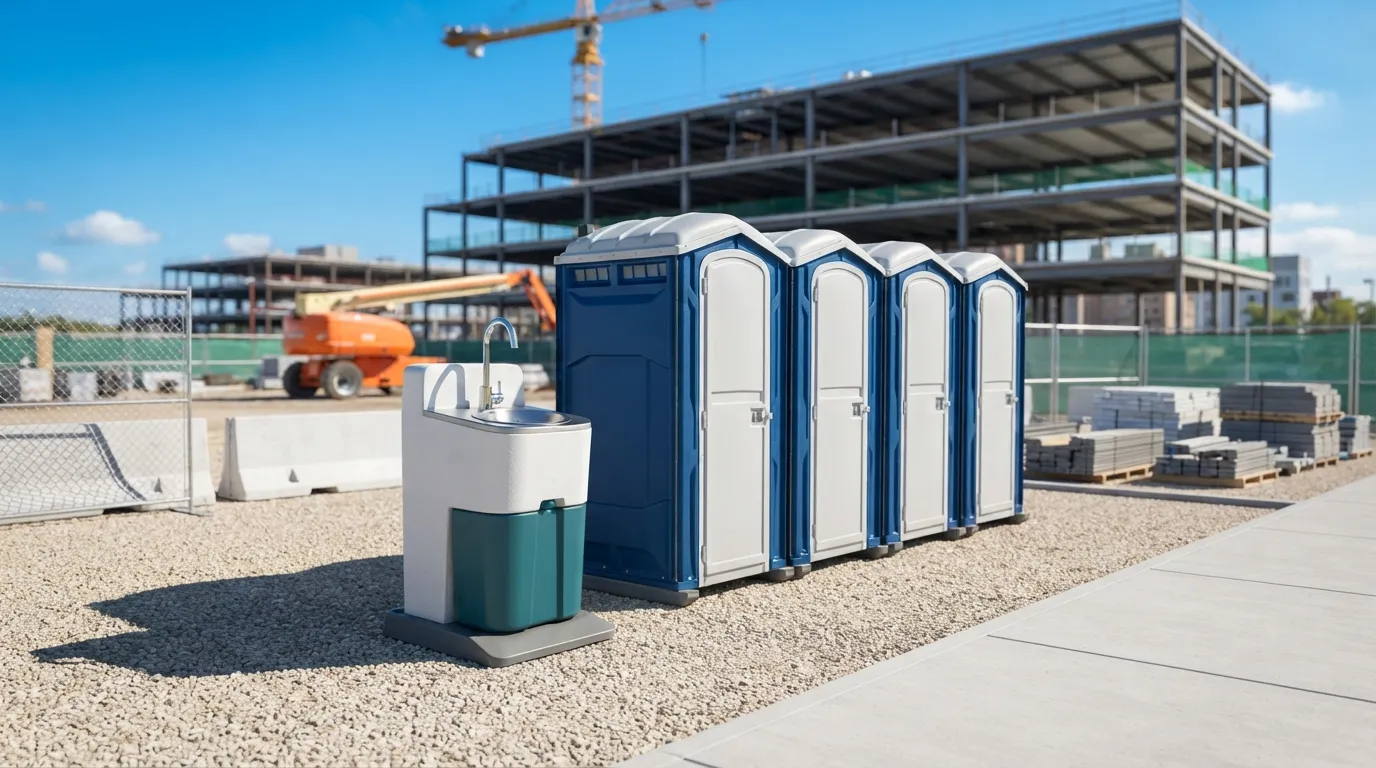
No. A standard portable toilet rental handles waste, not washing, and OSHA treats them as separate obligations. A standard unit runs about 44 by 48 inches on the ground and stands roughly 92 inches tall, with a 60 to 70 gallon holding tank, but none of that includes soap or water for hands. If your scope involves painting, coatings or pesticide work anywhere in Ontario, you need a standalone portable sink rental or hand sanitizer station rental alongside the toilets, not instead of them. Some crews pair a porta john rental with a sink unit at the same drop point to keep both requirements covered in one delivery. Farms and ag operations fall under a different standard entirely: 1928.110 requires potable water, toilets and handwashing for hand-labor employees, at one facility per 20 workers, within a quarter mile walk. That is stricter on distance than most construction rules, and it is worth checking before you plan restroom placement for farm and agricultural restrooms work near Eastvale or Jurupa Valley.
There is no fixed unit-per-worker ratio for handwashing stations the way there is for toilets under 1926.51(c). What matters is proximity and contaminant exposure. If painters are working across a spread-out site, one station near the entrance is not enough. Crews walking more than a short distance to wash up tend to skip it, which defeats the purpose. We generally recommend placing a station within reach of every contaminant-generating task, the same logic behind the porta potty placement guide we use for toilet layout. For a mid-size Ontario job with painting and coating work spread across multiple zones, that might mean two or three stations rather than one. If you are also tracking toilet counts, our how many porta potties do I need page walks through the 1926.51(c) math side by side. ADA-accessible handwashing matters too: ADA Standards section 308.2.1 caps unobstructed forward reach at 48 inches high and 15 inches low, and section 309.4 requires operable parts usable with one hand and no more than 5 pounds of force, which rules out stiff pumps or tight faucet knobs on accessible units.
Pricing depends on unit type and how long you need it. Here is what typically applies to a standalone station versus a full sink setup, distinct from toilet or trailer pricing:
| Unit | Day | Week | Month |
|---|---|---|---|
| Standard portable toilet (for comparison) | $100 - $350 | $130 - $500 | $125 - $325 |
| Delivery fee | $100 - $500 | $100 - $150 | $120 - $420 |
| Service fee | $100 - $300 | $100 - $220 | $100 - $300 |
Delivery and service fees apply on top of the unit rate, and a longer rental always costs less per day than a short one, so a month-long job in Ontario pencils out better than renting week to week. For a full cost breakdown across unit types, see porta potty rental cost or porta potty rental per day if you are comparing daily rates directly. Weekend rates for short events run higher than weekday daily rates because of quick turnaround delivery and pickup. If your job also needs waste removal, pair the station with a roll-off dumpster rental or check dumpster rental cost for that side of the budget.
No. Sanitizer does not satisfy 29 CFR 1910.141(d)(2), which specifically requires soap and towels or a hand-drying device. A hand sanitizer station rental is a fine supplement between washes, but when 1926.51(f)(1) applies because of paint, coating, herbicide or insecticide work, you need an actual sink with running water and soap.
If nobody on site is applying paints, coatings, herbicides or insecticides, 1926.51(f)(1) does not trigger. But OSHA 1926.51(a)(1) still requires potable water at every job site regardless of size, so smaller crews in Ontario often still need at least a basic water source.
Yes. Events and short jobs commonly rent stations for a single weekend rather than a full week. Pair it with an event restroom rental or wedding restroom rental setup so guests have both washing and toilet access in one delivery.
Not much in practice; both terms describe a self-contained unit with water, soap and a basin. Some vendors use "sink" for freestanding units and "station" for multi-basin setups on busier sites. Check our portable sink rental page for specifics.
Yes, when units serve the public or workers with disabilities. ADA Standards section 308.2.1 sets reach ranges, and section 309.4 requires one-hand, low-force operation. Pair an accessible sink with an ADA accessible porta potty to keep the whole cluster compliant, per ADA 213.2's clustering rule.
Yes. Ontario Porta Pros delivers handwashing station requirements across Ontario and the surrounding metro, with same-day and next-day drop-off available on most orders.
Pricing depends on the unit and how long you need it. See our cost breakdown and request a free quote for an exact figure.
Standard rentals include scheduled service — a pump-out, a clean, a restock and fresh deodorizer. Busy or hot-weather sites can be serviced more often.
Call now or request a free quote — clean units, on-time delivery, transparent pricing.